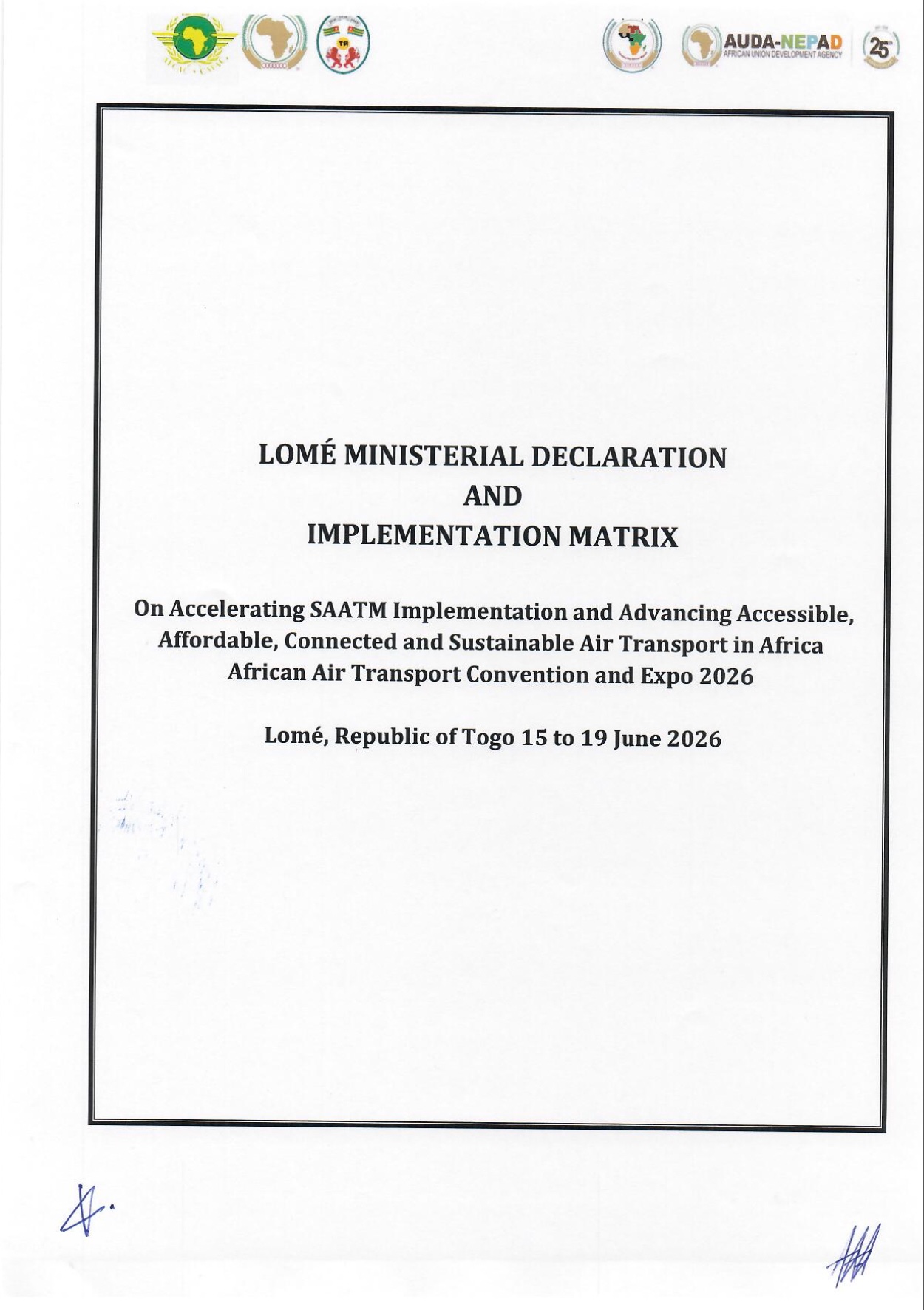
On 16th June 2026, during the inaugural African Air Transport Convention and Expo (AATCE) organised by the African Civil Aviation Commission AFCAC in Lomé, Togo, African Ministers adopted the Lomé Ministerial Declaration and Implementation Matrix on Accelerating SAATM [Single African Air Transport Market] Implementation and Advancing Accessible, Affordable, Connected and Sustainable Air Transport in Africa. Through the Declaration, the Ministers seek to reduce the cost of air transport, increase routes and connections within Africa, ensure seamless mobility, promote safety and security, as well as promote sustainability and innovation across the aviation sector.
During the same week, at the 69th Session of the UN Committee on the Peaceful Uses of Outer Space (COPUOS) in Vienna, Austria, COPUOS supported by the United Nations Office for Outer Space Affairs (UNOOSA) published an Issues Brief titled “Challenges and Opportunities of Airspace Integration for Space Transportation Operations.” COPUOS highlighted “the accelerating convergence of aviation and [outer] space activities.” It also noted that “more predictable and efficient airspace integration can lower barriers for emerging space nations, while safeguarding the critical role both [outer] space and aviation play in sustainable development.” Similar in purpose to the Lome Declaration, COPUOS through the Issue Brief, intends to reduce additional costs on air transport resulting from space transport (such as through delays in airplane take-off or landing, flight rerouting, increased fuel burn due to rerouting, network disruptions, and increased CO₂ emissions); reduce obstructions to air transport caused by space transport requirements; promote safety and security from outerspace activities; and ensure equitable access to airspace by all users.
Furthermore, the International Civil Aviation Organisation (ICAO) launched a Space Operations Task Force on the sidelines of the COPUOS Session. The mandate of the task force is to develop guidance and recommendations for integrating space transport operations into the aviation ecosystem.
These initiatives by AFCAC, COPUOS and ICAO are a strong motivation for closer interaction and collaboration between the African airspace and outerspace communities.Africa stands at a crossroad
Currently, Africa is building a single air transport market, led by AFCAC, a specialised agency of the African Union (AU). According to AFCAC, this is expected to double intra-Africa air traffic, cut air fares by a quarter, enhance connectivity, stimulate job creation and increase national GDP.
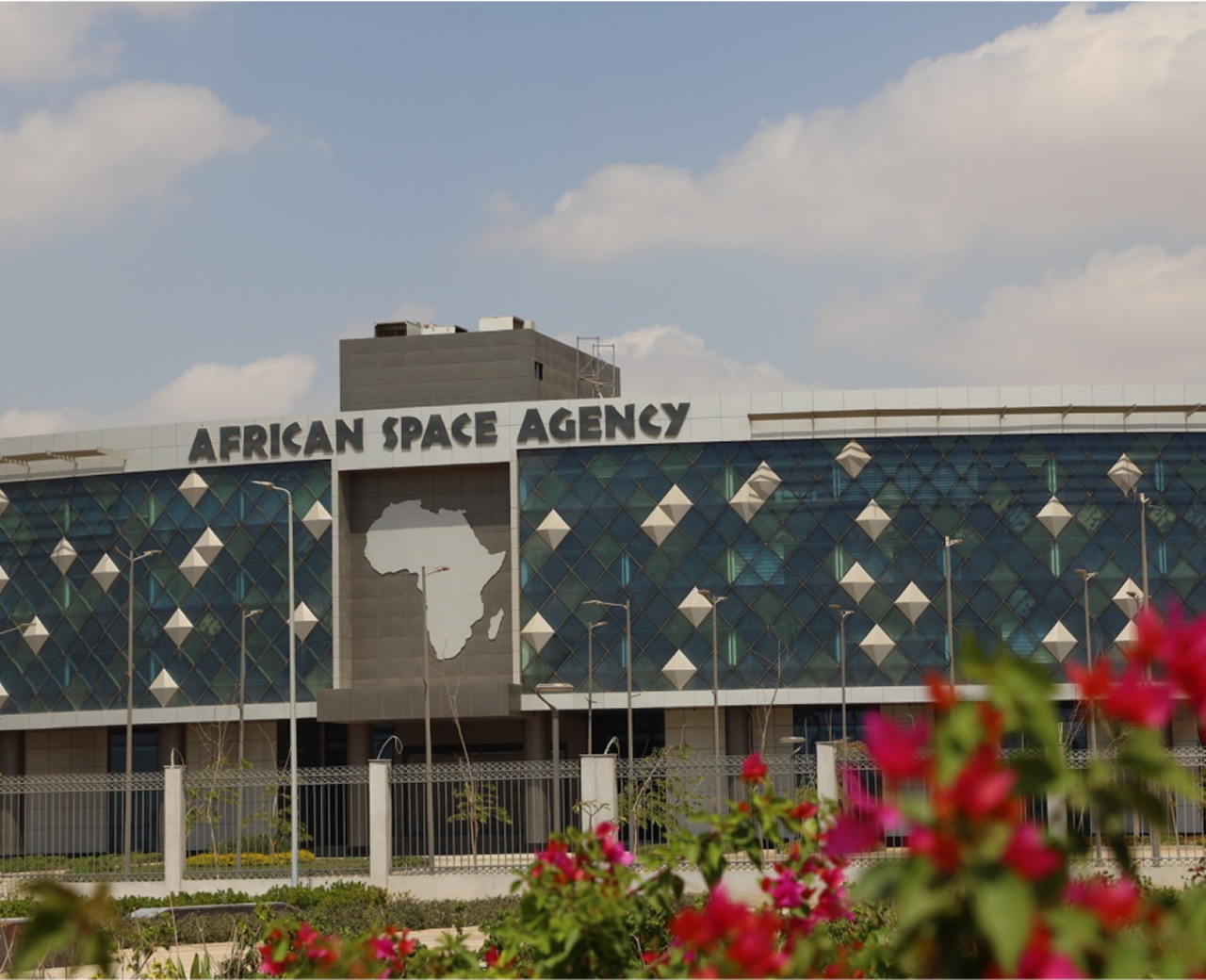
Simultaneously, important developments are happening in the outerspace sector. The African Space Agency (AfSA) has been established to harmonise and coordinate continental outerspace activities. At the national level, new space programmes and facilities are been established. Use cases for satellite applications are growing, often through international partnerships. Some African countries (such as South Africa, Kenya, Nigeria and Djibouti) are developing launch capabilities and/or spaceports. In a few years, these capabilities and facilities would mature, thereby increasing launch and possibly re-entry activities in the continent. They will require clear airspace for their operations.

Furthermore, the aviation sector heavily depends on satellites for positioning and navigation, weather nowcasting and forecasting, and communications. As aviation activities increase, the demand for outerspace services will also rise proportionally.
Interest in space tourism is also increasing in Africa, leading to more restricted or regulated zones for air traffic over designated astronomical facilities or zones. A case in point is South Africa’s Astronomy Geographic Advantage Act currently enforced over the Karoo region in the country’s Northern Cape province, which empowers the Minister of Science, Technology and Innovation (DSTI) to restrict airspace usage, radio frequency transmissions and emissions into the air. Other countries exploring space tourism opportunities include Namibia, Kenya, Morocco and Egypt. Similar policies or laws would restrict air traffic in more regions across Africa.
Another concern is the increasing threat of space debris falling to Earth. Incidents have occurred in South Africa, Uganda and Kenya. Though there is no report on the impact on airplanes in flight or landing at an airport, falling space debris threatens air travel.
The examples highlighted above indicate that Africa is at a crossroad. It is integrating and expanding its air transport market on the one hand; on the other, it is building outerspace capabilities and facilities. Both sectors impact each other, yet, interaction between the airspace and outerspace communities is limited and domain-specific.
Moreover, SAATM is a complex undertaking. The evolving airspace and outerspace activities could introduce more complexities into it.Governance matrix at the AU
The complexities extend from operations to governance. The AU Continental Space Programme has four thematic priority areas: Earth Observation, Satellite Communication, Navigation and Positioning, as well as Space Science and Astronomy. The African Space Agency (AfSA) which was established to implement the space programme, operates under the oversight of the African Space Council. The Council reports to the AU Specialised Technical Committee on Education Science and Technology (STC-EST). As required by the AU Constitutive Act, STC-EST works in collaboration with the Department of Education, Science, Technology and Innovation (ESTI) in the African Union Commission (AUC).
Among the four thematic priority areas of the AU space programme, policies and programmes related to Navigation and Positioning fall under the purview of the STC on Transport, Transcontinental and Interregional Infrastructure, and Energy (STC-TTIIE). Policies and programmes related to satellite communication and frequency spectrum fall under the purview of the STC on Communication and Information Communications Technology (STC-CICT). Both STC-TTIE and STC-CICT work in collaboration with the AUC Department of Infrastructure and Energy (DIE).
The STC-TTIIE is also responsible for continental civil aviation, including the implementation of Single African Air Transport Market (SAATM). While AFCAC is the specialised agency of the AU charged with the implementation of SAATM, the STC-TTIE, which consists of Ministers of Aviation or Transport, provides political, policy and legal frameworks. As the aviation sector is a major user of satellite navigation, communication and weather services, there is a need for more engagement between the airspace and outerspace communities.

A view outside Africa
Other regions are already making deliberate efforts to strengthen integration and collaboration between the airspace and outerspace communities. In the U.S., the regulatory body for air transport – the Federal Aviation Administration – also regulates space transport (launch and re-entry) as well as spaceports. Similarly, in the United Kingdom, the Civil Aviation Authority also regulates space transport and launch facilities. This is a recognition of the fact that the line separating Airspace and Outerspace is thinning out.
There have also been calls for a single global regulatory body for Airspace and Outerspace, perhaps ICAO. However, this does not seem to have the support of some countries. Nevertheless, the renewed collaboration between UNOOSA and ICAO is a welcome development. It may help in responding to the perennial issue of the definition and delimitation of outer space, a regular agenda item at COPUOS. It could also strengthen collaboration between the airspace and outerspace communities, in Africa and globally.
Final thoughts
Africa needs to pay more attention to the evolving trends in the airspace and outerspace domains. There is a need to establish platforms and/or mechanisms for sustained engagement between communities in both domains. This could begin with a series of foresight studies.
The Lomé Declaration called on AFCAC to develop an implementation matrix for SAATM. As AFCAC begins this work, it should consider outerspace integration into the matrix. Doing so now could be less costly than retrofitting policies, systems and structures later when outerspace activities become more regular.
Also, a roadmap for integrating airspace and outer space governance is needed. This roadmap should include a framework for AFCAC and AfSA to work together as they cannot afford to work in silos. In the first case, they are both implementing two important flagship projects of the AU’s Agenda 2063. Closer interaction does not suggest merging of both organisations, as they operate in two unique domains (though aviation does need outerspace, and outerspace does need airspace). It also does not suggest legal harmonisation as Member States exercise sovereignty over their airspace whereas there is no exercise of control over outerspace, except over objects owned by Member States.
By extension, the governance mechanism for aviation and outerspace in the AUC need to be reviewed. For effectiveness, both the AUC Department of Education, Science, Technology and Innovation (ESTI) and the AUC Department of Infrastructure and Energy (DIE) need to collaborate more closely with the African Space Agency (AFSA). This could be the reason why the Commissioners of both departments are statutorily members of the African Space Council.
Closer interaction between the airspace and outerspace communities would involve dialogues, information exchange, capacity building, joint planning, cross-sector programmes, policy alignment and institutional cooperation.